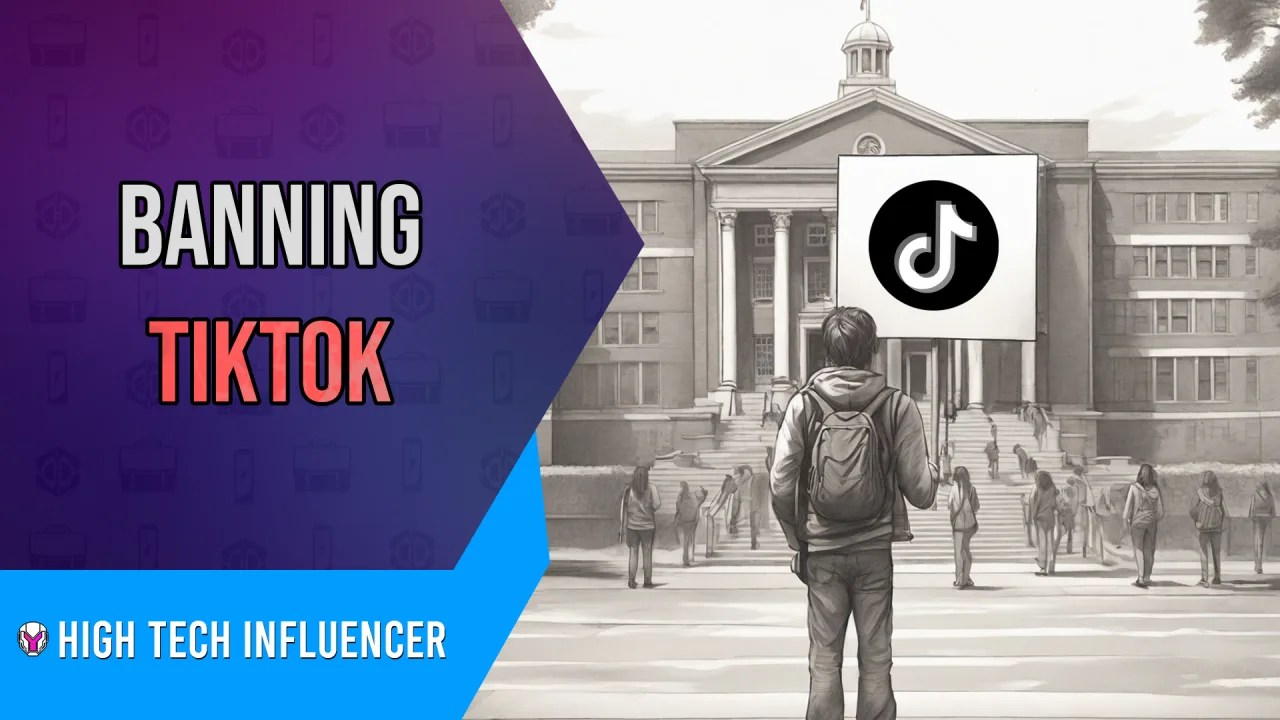
What happens when you're cornered with limited options, like resorting to hiring lobbyists and politicians to eliminate your competition? This seems to be the predicament TikTok is facing. Recently, there was a vote to "ban" TikTok, allegedly to force the sale of the company to U.S. buyers, under the guise of national security. This claim is linked to the fact that Chinese investors own 20% of ByteDance, TikTok's parent company. Based on my observations, secrets don't stay hidden for long when they're under Congressional scrutiny. When questioned about their decision to potentially ban TikTok—a platform used by 170 million Americans—the typical responses from lawmakers were "it's classified" or "I have information that the average American doesn't." Without concrete evidence, labeling TikTok a national security threat seems merely speculative.
https://youtu.be/5W-ufw5Z7ac?si=grvTlTIqo5uLJnWt
In a peculiar series of questions, Senator Tom Cotton persistently inquired about the nationality of TikTok's CEO, Shou Chew, seemingly unwilling to believe he had no ties to China. This reflects a broader suspicion among some politicians that any significant Chinese investment translates into control by the Chinese government. Yet, TikTok’s servers are located in Texas and are securely managed by Oracle, a reputable American company. Despite these assurances, the bill to force TikTok’s sale was overwhelmingly passed with a vote of 360-58. After the bill's passage, it was noted that many supporters received contributions from AIPA, a pro-Israel lobbying group.
NOTE: There is a 2017 national intelligence law requiring individuals, organizations, and institutions to assist China's Public Security and State Security offices in their intelligence work if asked to. This is why American data on TikTok is hosted in Texas to prevent having to ever hand over this information if asked.
For many, TikTok has evolved into a vital platform for political discourse and rapid information sharing, echoing the grassroots activism seen during the Vietnam War. An amendment to expedite the sale of TikTok was hastily included in a foreign aid package, a common legislative strategy that combines unrelated issues, which I believe undermines the clarity and purpose of law-making.
Moreover, companies like Meta routinely influence legislation by financially courting politicians and employing lobbyists to champion their causes. Established social media giants have grown into colossal entities since the mid-2000s. TikTok, now the preferred choice for Gen Z, exemplifies the cyclical nature of social media platforms, which I describe in my theory of the "social media life cycle". As platforms reach critical mass, they can no longer expand by simply adding more users. As a result, as the original user base ages, successive generations seek new platforms. This cycle has seen GeoCities give way to MySpace, MySpace to Facebook, and Facebook to Snapchat and Instagram, with TikTok being the latest. Facebook’s transformation into Meta, referencing the emerging concept of the Metaverse, is a bid to stay relevant.
Personally, I belive if we put such harsh restrictions on TikTok, we should be doing the same for all social media platforms. There have been multiple cases for Meta to face harsh punishment including hiding massive data breaches that heavily influenced the 2016 presidential election.
The future of TikTok remains uncertain. Banning it could be seen as a breach of free speech. It will also bring hardship for many who use the platform to earn a living. TikTok Notes, an Instagram rival, could become independent, maintaining the brand's presence. Alternatively, the void left by TikTok might lead to the emergence of a new platform that becomes the next hub for youth engagement, perpetuating the social media life cycle.
If you enjoyed this article, please share it with someone who you think would enjoy it. You can also reach me on Twitter.